Advertorial
Looking for Home Remedies for Overactive Bladder? Here's What Most Lists Leave Out


By: Melissa Turner
Women's Wellness · Bladder & Urinary Health
8 min read
September 8, 2026
A closer look at the home and natural approaches most commonly recommended for overactive bladder, why they don't work the same way for every woman, and a newer area of research that rarely makes it onto the list.
It can hit mid laugh. Mid sneeze. On the walk in from the car, when the bathroom's still a few minutes away and your body's already decided it can't wait. Or it's quieter than that. You're up again at 2 a.m... walking the same short hallway you walked three hours ago...
If you've started looking for home or natural remedies for this, you're already doing the smart thing — trying to understand it before reaching for anything more complicated. So let's start there.
Two things first.
You're not alone. Not even close. Research from the American Academy of Family Physicians puts it at roughly half of adult women dealing with some form of urinary incontinence at some point — including the sudden urge type doctors call overactive bladder.
And age isn't the reason you have to live with it. Mayo Clinic doesn't treat this as something that just comes with getting older. It gets more common with age, sure. But common isn't the same as unavoidable. And since you're already looking for natural ways to help, that's the version worth believing.
Now, the term you've probably already run into — because it explains a lot less than it sounds like it should.
Why "Overactive Bladder" Can Mean Different Things for Different Women
Maybe a doctor gave you that term. Maybe you found it yourself, searching around trying to make sense of what your body was doing. Either way, having a name for it usually feels like relief...for about five minutes.
Because a name isn't the same thing as an answer. "Overactive bladder" explains surprisingly little about what's actually happening, or why it's happening to you.
Here's the part nobody says out loud: overactive bladder isn't one condition. It's more like a junk drawer — a label that catches a whole cluster of symptoms with very different causes underneath. Two women can get the exact same diagnosis and be dealing with two totally different problems.
Which probably explains why the usual advice hasn't fully worked for you.
Why the Same Advice Doesn't Work the same way Twice

Search for home remedies for overactive bladder and you'll get the same short list every time: bladder training, cutting back on caffeine and alcohol, pelvic floor exercises, maybe a prescription if things are bad enough. All of it reasonable... All of it backed by real research. And for a lot of women, none of it fully works.
That's not the advice's fault. It's what happens when one label gets treated like one problem with one fix.
Take pelvic floor exercises — usually the first thing anyone suggests, and for good reason. The American Academy of Family Physicians says they meaningfully help about half the women who stick with them. Not because the other half are doing it wrong. It's that pelvic floor strength was only ever going to help with part of what gets called "overactive bladder." If your urgency comes more from nerve signals, or hormones, or something else entirely, no amount of correct technique was going to fix it.
Medications hit the same wall. Drugs like anticholinergics and beta-3 agonists calm the muscle spasms behind the urge, and for some women, that's exactly the right fix. For others, the side effects — dry mouth, constipation — show up before the relief does. So they stop, and go looking for something more natural.
None of this is anyone's fault. It's just what happens when one label covers a lot of different problems. Which raises the real question: if it's not one thing, what else could it be?
So What Else Could Be Going On?

Most home remedy lists stop right there. They hand you the standard short list and call it done. Here's the piece almost none of them mention.
For decades, doctors assumed the bladder was basically sterile — no bacteria in there, healthy or not. Nobody was hiding this. The tools to check simply didn't exist yet. That changed about ten years ago, once DNA testing got sensitive enough to find what older tests couldn't. And what it found was surprising: the bladder has its own small community of bacteria, just like the gut does. Scientists now call it the urinary microbiome.
Naturally, the next question came fast — do these bacterial communities look different in women dealing with urgency and leaks? A peer reviewed review in a science journal called Frontiers pulled together what several separate studies had already noticed. Women with urge related incontinence tended to have a different bacterial mix than women without it. Specifically, less of a bacteria called Lactobacillus, and more of others, including Gardnerella.
It's worth pausing here, because it's easy to read more into this than the science actually shows. This is a pattern seen across a handful of small studies — not proof that these bacterial differences cause anyone's bladder to act up. Researchers haven't ruled out other explanations, and nobody's claiming to have found the cause of overactive bladder. It's still an active, developing area of research, not a finished one.
But the research is real and peer reviewed. And if you've only ever been told "it's your muscles," this is a genuinely different piece of the puzzle — one that starts to explain why overactive bladder means something different for every woman, and why the same list of remedies doesn't work the same way twice.
Which Brings Up the Real Question
Not “what's the one fix for overactive bladder?” At this point, that's probably the wrong question.
A better question is: what if more than one factor is involved — and supporting the bigger picture means more than focusing on just one of them?
Let's take a closer look.
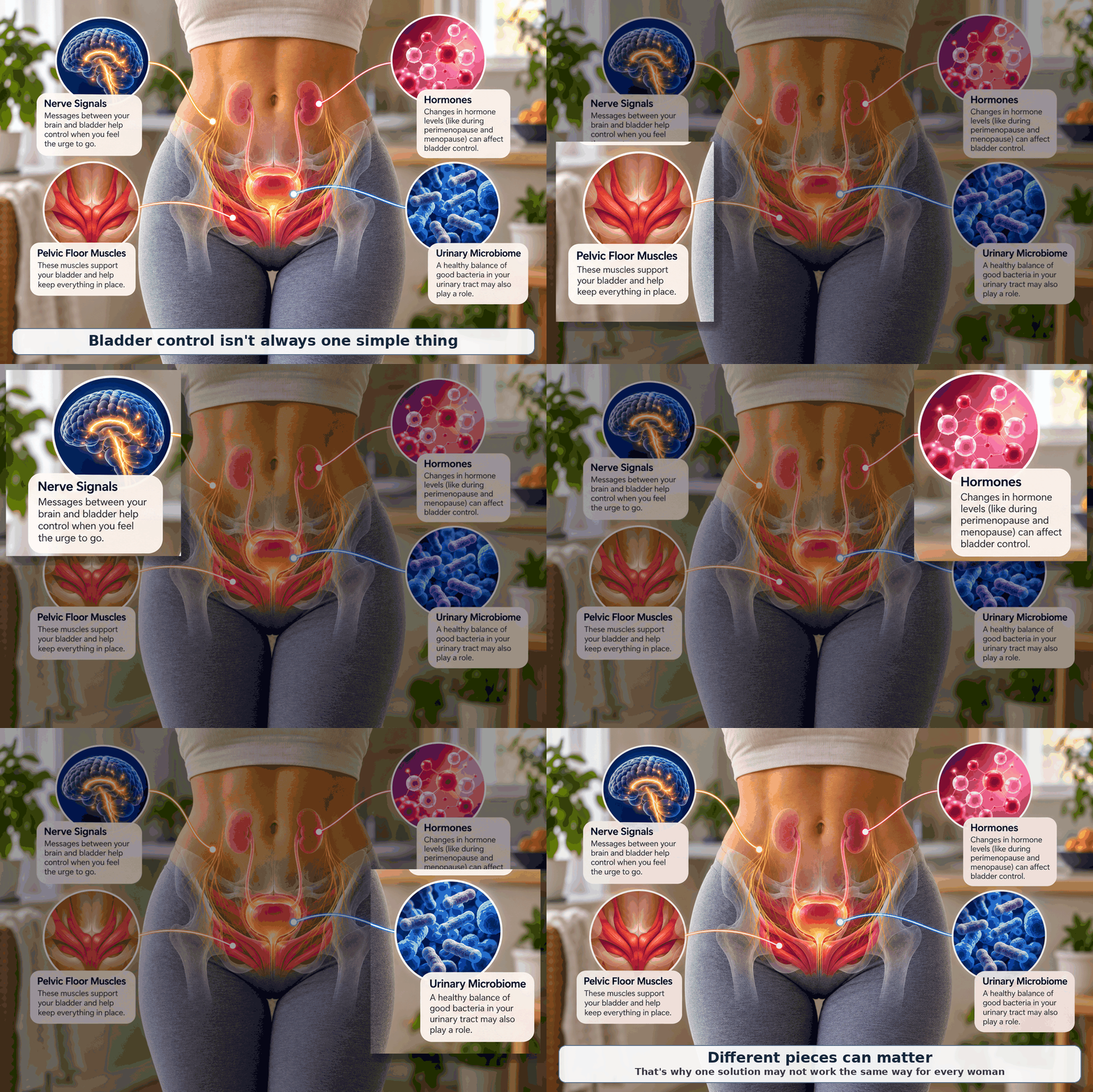
What Actually Supporting the Bigger Picture Looks Like
If you came here looking for natural ways to support your bladder, this is where it gets good.
If bladder control really involves more than one system — muscles, sure, but also nerve signals, hormones, and now this newer piece, the urinary microbiome — the question changes. It's not "which one thing do I fix." It's "how do I support all of it?"
To be clear, that's not trading one oversimplified answer for another. We're not swapping "it's your muscles" for "it's your microbiome." If anything, it's the opposite: the more parts involved, the less likely any single remedy was ever going to solve this on its own.
Muscle work and the usual lifestyle changes still matter. Keep doing them. But if the microbiome really is part of the picture, the next question is simple: is there a way to actually support it, not just know it's there?
Turns out that's a narrower question than it sounds. Most bladder supplements weren't built with any of this in mind. They're the same handful of ingredients you've probably already seen — cranberry, a vitamin blend, maybe saw palmetto — sold the same way for a decade, with no real link to the microbiome research at all. So the real question is: does anything actually target this newer angle instead of just repeating the same thing?
FemiCore takes a different approach. Its formula is built around the urinary microbiome — the same area of research we've just been looking at.
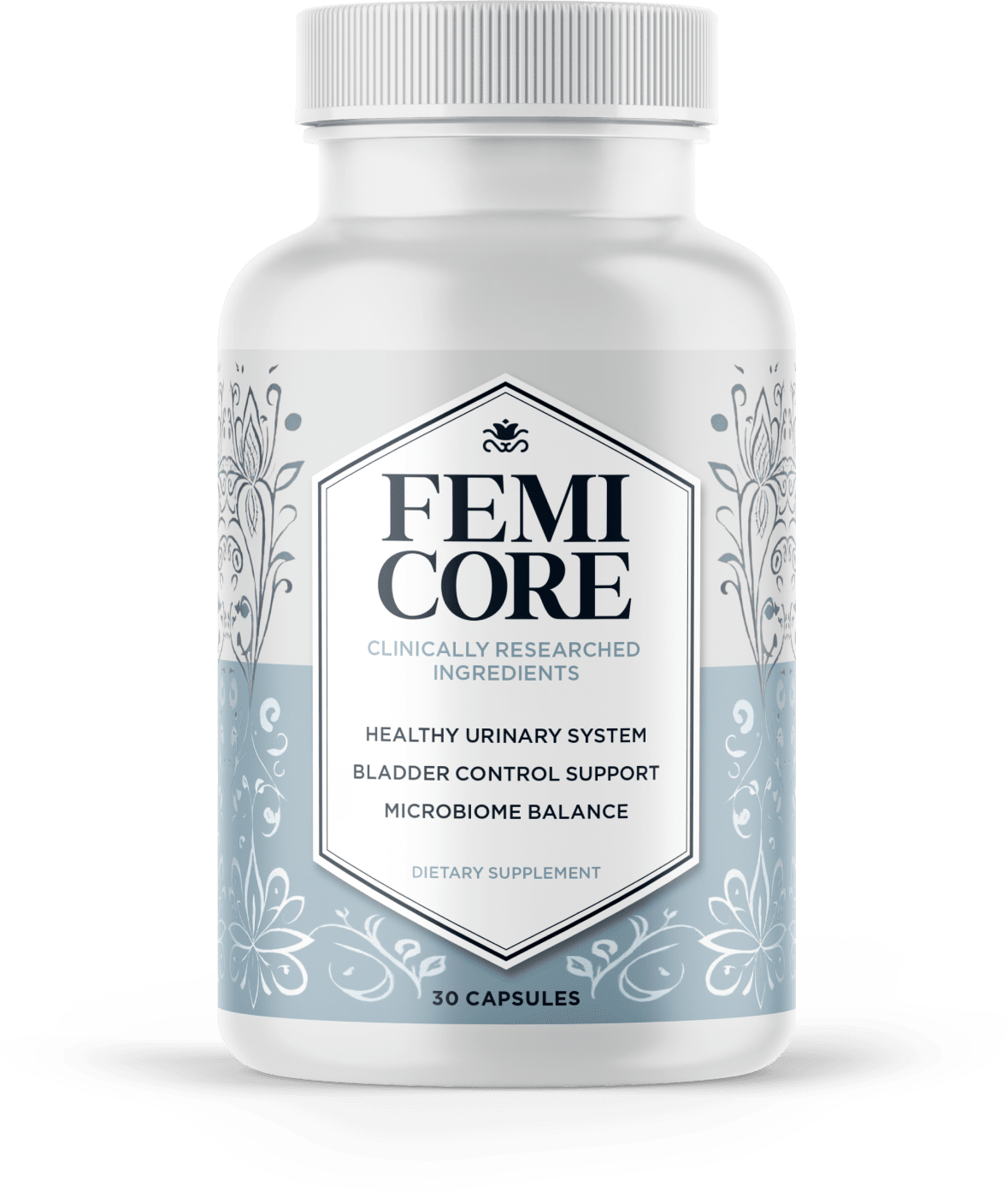
FemiCore is a dietary supplement built around that exact piece of the puzzle — the urinary microbiome — instead of repackaging the same cranberry and vitamins formula everyone else sells.
Here's what's in it:
The manufacturer says it's stimulant free, non-GMO, and built specifically around microbiome balance. That lines up with everything we just covered.
FemiCore's formula hasn't been tested in an independent clinical trial for urinary incontinence, and no research shows this exact combination rebalances the urinary microbiome or stops leaks. What can honestly be said is smaller than that: it's a formula built around the same research direction we just walked through, using probiotic strains that researchers have studied in connection with urinary microbiome health. That's a claim about what it's designed to focus on — not a claim about a guaranteed result. It shouldn't be read as one.
Which brings up a few fair questions.
The Questions Worth Asking before You Buy
"Isn't this just another cranberry supplement?" Cranberry's one ingredient among several, not the headline act. The real focus is the five probiotic strains — cranberry just plays a supporting role, the way it does in a lot of urinary health research, instead of being the whole formula dressed up with a new name.
"Is it actually safe to take?" It's marketed as stimulant-free and non-GMO, which is a reasonable baseline. That said, a couple of these ingredients — bearberry and Mimosa pudica especially — aren't ones to take without checking with a doctor first if you're pregnant, nursing, or on other medication. That's true of most herbal supplements, honestly, and it's a quick conversation worth having before starting anything new, FemiCore included.
"Why does it push the bigger package so hard?" Multi bottle pricing is pretty standard for supplements — the per-bottle cost drops the more you order, and the bigger option comes with a few extra digital guides from the manufacturer. None of that makes the smaller package the wrong choice. It comes down to what you're actually comfortable trying, not which option gets called "best value."
One more honest question before we wrap up — what actually backs the purchase?

Here's the part that matters most, and it's also the easiest to get right:
nobody writing this, including FemiCore itself, is telling you it's guaranteed to work. What's actually on the table is a chance to find out, without much financial risk. FemiCore comes with the manufacturer's official 60-day money-back guarantee, as long as you buy through their official site.
That's not proof it works. It's simply a way to lower the risk of finding out.
There's real, early-stage research behind the urinary microbiome and its possible link to urge related symptoms. FemiCore is one of the only formulas actually built around that angle, instead of the usual bladder supplement template. Nobody can promise it'll work for you specifically — honestly, nobody could say that about any supplement. What you can decide is whether the idea makes enough sense, and whether the risk feels low enough to try, given the guarantee attached.
That's a decision you can make with the real facts in front of you, which is exactly what FemiCore's official page lays out: the full ingredient list, current package options, and the guarantee terms straight from the manufacturer.
Please note that the information we provide is not intended to replace consultation with a qualified medical professional. We encourage you to inform your physician of changes you make to your lifestyle and discuss these with him or her. For questions or concerns about any medical conditions you may have, please contact your doctor.
Statements on this website have not been evaluated by the Food and Drug Administration. Products are not intended to diagnose, treat, cure or prevent any disease. If you are pregnant, nursing, taking medication, or have a medical condition, consult your physician before using our products.
The website's content and the product for sale is based upon the author's opinion and is provided solely on an "AS IS" and "AS AVAILABLE" basis. You should do your own research and confirm the information with other sources when searching for information regarding health issues and always review the information carefully with your professional health care provider before using any of the protocols presented on this website and/or the product sold here.
ClickBank is the retailer of products on this site. CLICKBANK® is a registered trademark of Click Sales, Inc., a Delaware corporation located at 1444 South Entertainment Ave, Suite 410, Boise, Idaho, 83709, USA and used by permission. ClickBank's role as retailer does not constitute an endorsement, approval or review of these products or any claim, statement or opinion used in promotion of these products.
*For international shipping (outside of the United States), shipping fees will apply. Read more here.
FemiCore Important Pages
Contact | References | Terms Of Use | Disclaimer | Privacy Policy | Shipping Policy | Refund Policy